8171 SMS Not Received in 2026? Complete Guide to Fix BISP 8171 SMS Delay and Check Your Status
Many beneficiaries of the Benazir Income Support Programme (BISP) rely on the BISP 8171 Service to receive important messages about eligibility, payment updates, and verification. However, in 2026, thousands of applicants have reported delays in receiving SMS notifications from 8171.
If you have applied for Benazir Kafalat Program or completed the Ehsaas Program 8171 check but still haven’t received an SMS, this guide explains the reasons, solutions, and alternative methods to check your status.
What Is the 8171 SMS Service?
The 8171 SMS service is an official messaging system used by the Benazir Income Support Programme to inform applicants about:
- Eligibility confirmation
- Payment release updates
- NSER survey verification
- Document verification alerts
- Disbursement details
Applicants simply send their CNIC number to 8171, and the system responds with eligibility information.
Why 8171 SMS Is Delayed in 2026
Several factors can cause delays in receiving the 8171 confirmation message. These issues are common across Pakistan.
1. High Traffic on the 8171 System
Due to new registrations and payment phases under the Benazir Kafalat Program, millions of people send CNIC queries daily. This overload can slow down SMS responses.
2. Incomplete NSER Survey
If your data in the National Socio-Economic Registry is incomplete or outdated, the system may delay your response until verification is completed.
3. Mobile Network Issues
Sometimes the problem is related to telecom networks such as:
- Jazz
- Telenor Pakistan
- Zong
- Ufone
Network congestion or message filtering may delay SMS delivery.
4. SIM Not Registered on CNIC
The 8171 system works best when the SIM card is registered under the same CNIC used for the BISP application.
5. System Updates in 2026
The Benazir Income Support Programme frequently updates its database during new payment phases, which may temporarily delay responses.
How to Check BISP Status Without Waiting for SMS
If the 8171 SMS reply is delayed, you can still check your status through other methods.
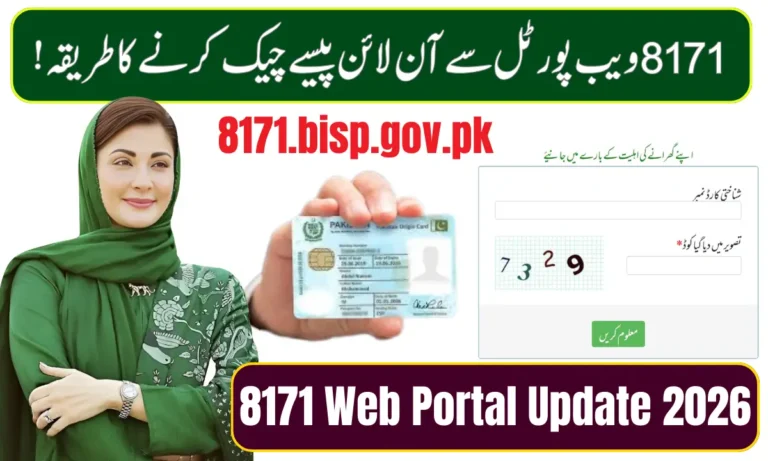
1. Use the 8171 Web Portal
The 8171 Web Portal allows beneficiaries to check their eligibility online.
Steps:
- Visit the official 8171 web portal
- Enter your CNIC number
- Fill in the captcha code
- Click Submit
You will instantly see your eligibility status.
2. Visit the Nearest BISP Office
Applicants can also visit a nearby Benazir Income Support Programme office for verification. Officials can check your record and update your information if needed.
3. Complete the NSER Survey Again
If your household data is outdated, you may need to update your record in the National Socio-Economic Registry database.
How Long Does 8171 SMS Take in 2026?
Normally, the 8171 SMS response arrives within:
| Situation | Expected Time |
|---|---|
| Normal system load | 1–5 minutes |
| High traffic | 1–24 hours |
| Verification required | 2–7 days |
If you have not received a message after 24 hours, try sending your CNIC again.
Tips to Avoid 8171 SMS Problems
To receive messages faster, follow these tips:
- Send your 13-digit CNIC number without spaces
- Use a SIM registered on your CNIC
- Ensure you have mobile balance
- Avoid sending multiple requests repeatedly
- Use the 8171 web portal if SMS is slow
Latest 2026 Update for BISP Beneficiaries
In 2026, the Benazir Income Support Programme expanded its digital verification system to reduce fraud and improve payment transparency. Because of these updates, some users may experience temporary 8171 SMS delays, especially during new payment releases under the Benazir Kafalat Program.
Final Words
The 8171 SMS delay in 2026 is usually caused by system traffic, verification issues, or network delays. Fortunately, beneficiaries do not have to rely only on SMS anymore. The 8171 web portal, updated NSER records, and direct visits to BISP offices provide alternative ways to check eligibility and payment status.
If you recently applied for BISP or Ehsaas programs, stay patient and ensure your information in the National Socio-Economic Registry is accurate to avoid future delays.